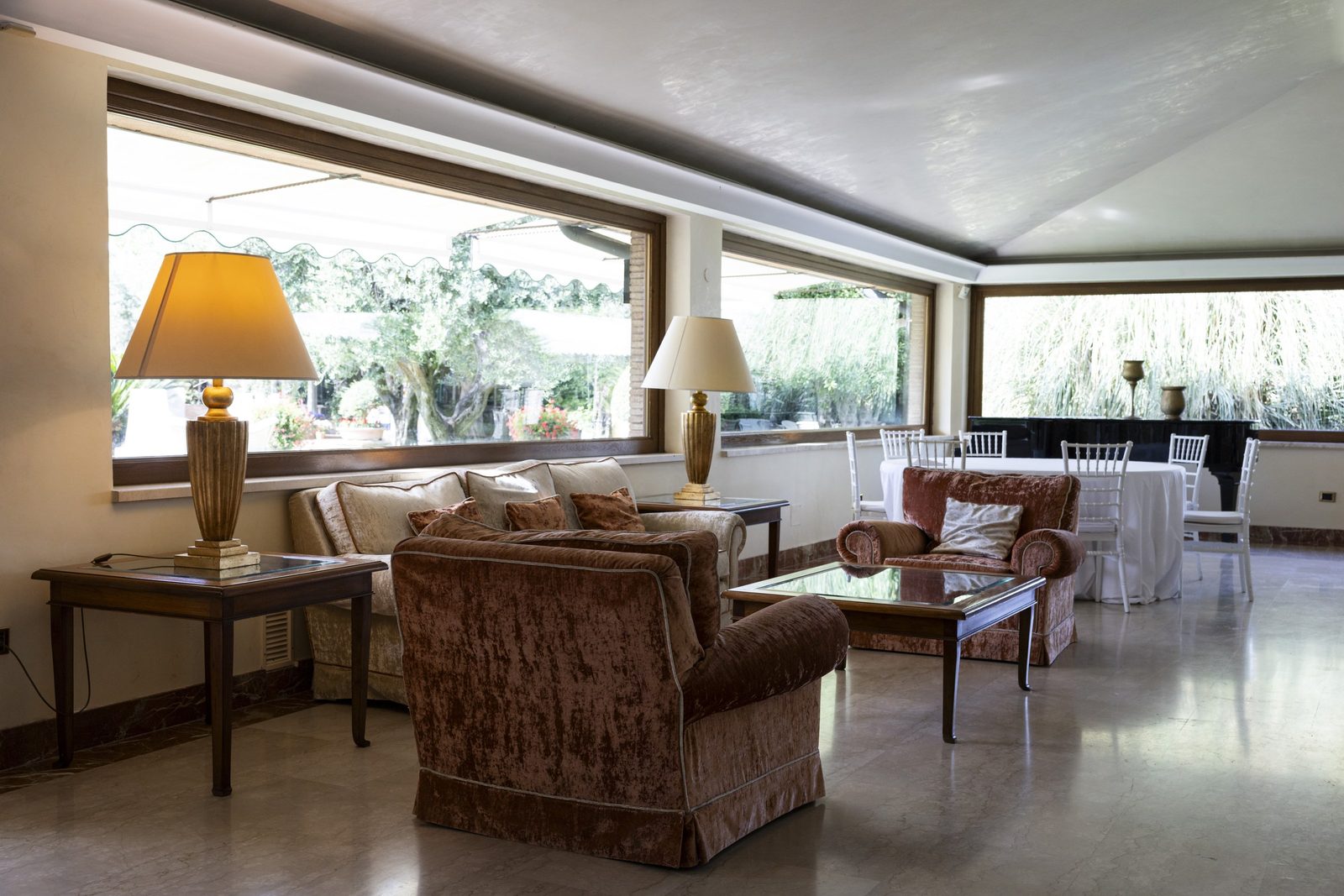
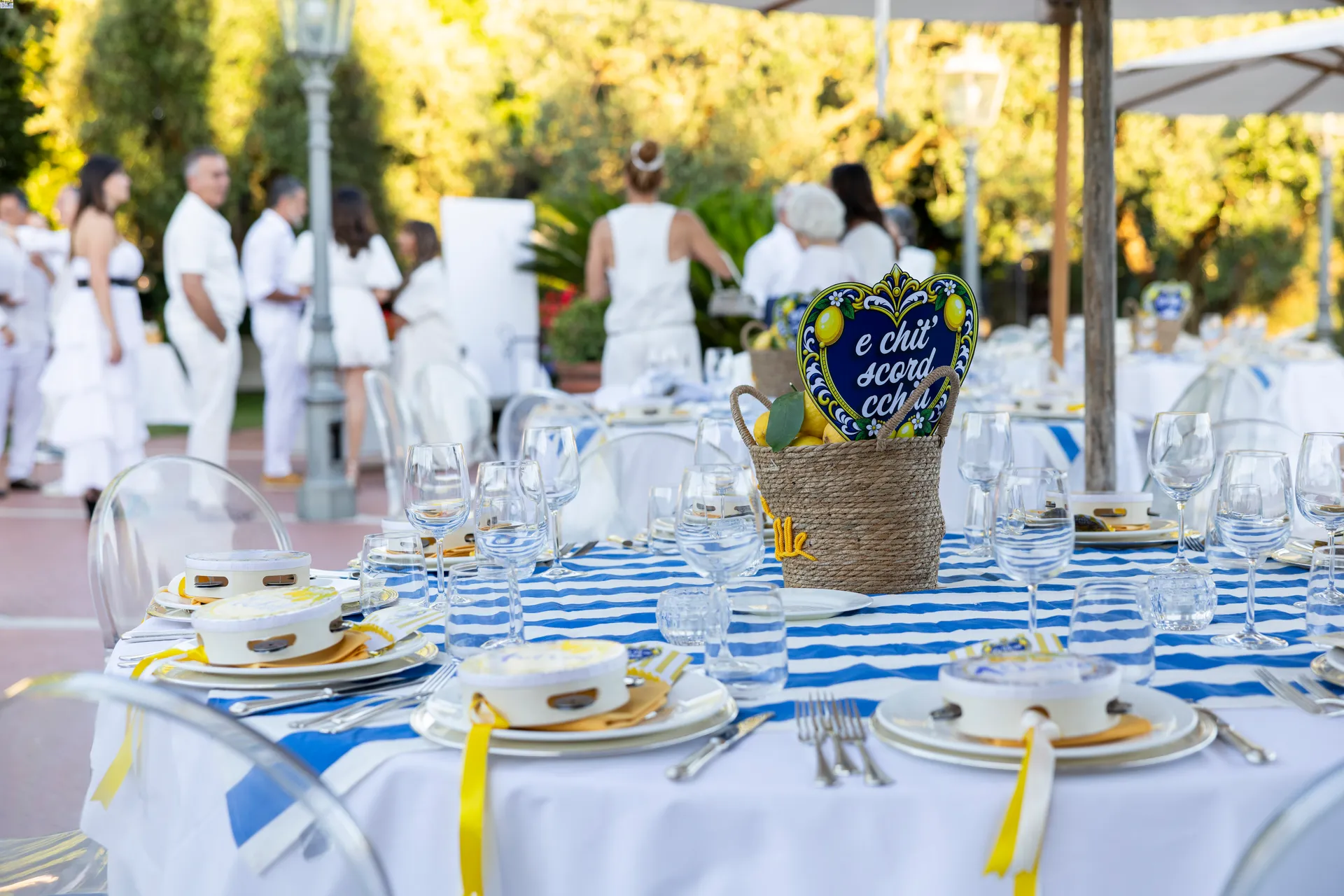
The tableau de mariage is the display, usually a board, a panel or a row of signs, that tells each guest which table they are seated at. Preparing it well means doing the hardest job first: deciding who sits with whom, and how many people to a table.
Casale Consolini is the Consolini family’s venue at Via delle Capannelle 201, in the south of Rome, and it hosts receptions for 50 guests or more. For weddings the Casale takes care of the table settings, and for family ceremonies it also handles the graphics for invitations and the tableau.
Seating plan first, tableau second
It helps to keep two things apart. The seating plan is a decision: which guests sit together. The tableau is how you present it: how you show it to your guests. If you start with the second, choosing the material and the design, you end up redoing everything when a name changes. Do the plan first, then the graphics.
Give the venue the table arrangement with some notice, because the service and the number of tables to set up depend on it. As with the menu, the venue will have a date by which it needs the final version, and you should keep to it.
How to divide guests among tables
Start from the full guest list and sort people into circles. The most common are her family, his family, her friends, his friends, colleagues, and friends you share. On your sheet, give each circle a colour.
Then assign the tables using three criteria:
- people who know each other sit together, so that no guest is left isolated;
- mix people of different ages and circles with care, only when you are sure they will get along;
- keep relatives with difficult relationships apart.
The couple decide last on their own table and their parents’ table. A practical choice is to seat the witnesses near the couple, and the grandparents somewhere comfortable, close to the entrance of the room and away from the music.
How many guests per table
The number depends on the shape of the tables and the room. Whatever the layout, you can set a reference number, say eight or ten people, and then keep a few tables with one seat more or less for larger families. Avoid tables that are too full, where the conversation breaks into pieces, and tables that are too empty, where guests feel alone.
The shape of the tables and the number of seats are decided with the venue at the site visit, when the guest count is almost final.
Families, friends, children
A family with small children needs to be near the exit of the room and the garden. If there are many children, a table of their own, with an adult close by, works better. Friends who arrive alone do well with people from the same group.
Talk through the difficult seating questions with someone who knows the people involved: a parent, a witness. A decision made with them avoids problems on the day.
How to present the tableau
The tableau can take different forms: a panel listing tables and names, an illustrated board, a row of hanging cards, or a small table with name cards in order. Each choice changes how long guests take to find their seat. With 80 or 100 guests, an orderly list saves a lot of waiting.
A few useful rules:
- write the names in alphabetical order, with first and last names in full;
- use a large typeface that stays readable in low light;
- place the tableau at the entrance to the reception area, where nobody has to queue in the sun;
- if the reception is in the garden, plan some shelter from the wind for the board.
Table names can be numbers, cities, flowers, or places from the couple’s life. A theme like this works when it matches the rest: flowers, invitations, the confettata (the sugared-almond table, article in Italian).
Place cards and table setting
The place card confirms the seat once the guest has sat down. It is usually a small card with a name, or the object itself: a tag tied to the wedding favour, a small gift. If you choose not to use individual place cards, one sign per table is enough, but guests will have to decide for themselves where to sit.
The Casale works with the couple on the table settings and floral decorations. Ask how much is included and how much is up to you: graphics, printing, cards. If you have already read our article on banqueting (in Italian), you know it is best to settle at the start what the proposal includes.
The tableau outdoors or indoors
The tableau changes with the setting. Outdoors, in natural light, a panel with simple, clear lettering is enough. Indoors, with warm light and few lamps, it needs dedicated lighting. In the Casale’s garden there are candles, glowing spheres and lanterns hanging between the branches, which can light the tableau too. The garden also has century-old trees and flower beds: a spot in the shade is the best place for it.
What to do when something changes at the last minute
In the last few days there is always some change: a guest who cannot come, one who brings an extra person, an allergy mentioned late. The seating plan has to be able to change without redoing the tableau. A simple solution is to leave one table with a few free seats for last-minute changes, and to prepare the tableau only once the list is closed.
Agree with the venue on a date after which nothing changes, and ask guests to confirm by a clear deadline. Follow up personally with anyone who has not replied: a wrong guest count affects the menu, the tables and the tableau.
What to ask the venue
- what shape the tables are and how many seats each has;
- the deadline for giving the final arrangement;
- whether the venue prepares the tableau or it has to be made separately;
- where it can be placed and whether it needs a stand;
- what the table setting includes;
- how seats are handled for children and for guests who have difficulty moving around.
Piero and Antonella Consolini opened the Casale in 2006, and today their children Arianna and Mario carry it forward, as the story of the Casale explains. You can see the spaces on the page about the Casale’s rooms and garden and in the gallery.
How to ask for a proposal
To check availability for your date, fill in the questionnaire: it has five questions, including the number of guests, lunch or dinner, and the month. You can also write to info@casaleconsolini.it or call +39 06 722 0880; all the contact details are on the contacts page.