Banqueting is the complete service behind a reception: a venue, whether a room or a garden, the kitchen, the staff who serve, the table setting and usually someone who coordinates the day. If you choose banqueting, you do not have to assemble each piece yourself: one organisation looks after the event from start to finish.
Casale Consolini is the Consolini family’s venue at Via delle Capannelle 201, in the south of Rome: Piero and Antonella opened it in 2006, and today their children Arianna and Mario carry it forward. It hosts receptions for 50 guests or more.
Banqueting, catering, restaurant: the differences
The three terms are often confused, but they describe different services.
- A restaurant serves customers who walk in and sit down: a set or à la carte menu, a dining room open to everyone.
- Catering brings food and service to a place you have chosen, for example a hall, a house or a garden you have already found.
- Banqueting combines venue and service: the same business owns the space, cooks, serves and sets up.
This is a distinction of usage, not a legal rule, and each operator applies it in its own way, so always ask what the proposal includes. Casale Consolini is not an à la carte restaurant: it works with receptions for 50 guests or more, and for smaller groups Ristorante Consolini is the same family’s alternative.
What banqueting includes for an event
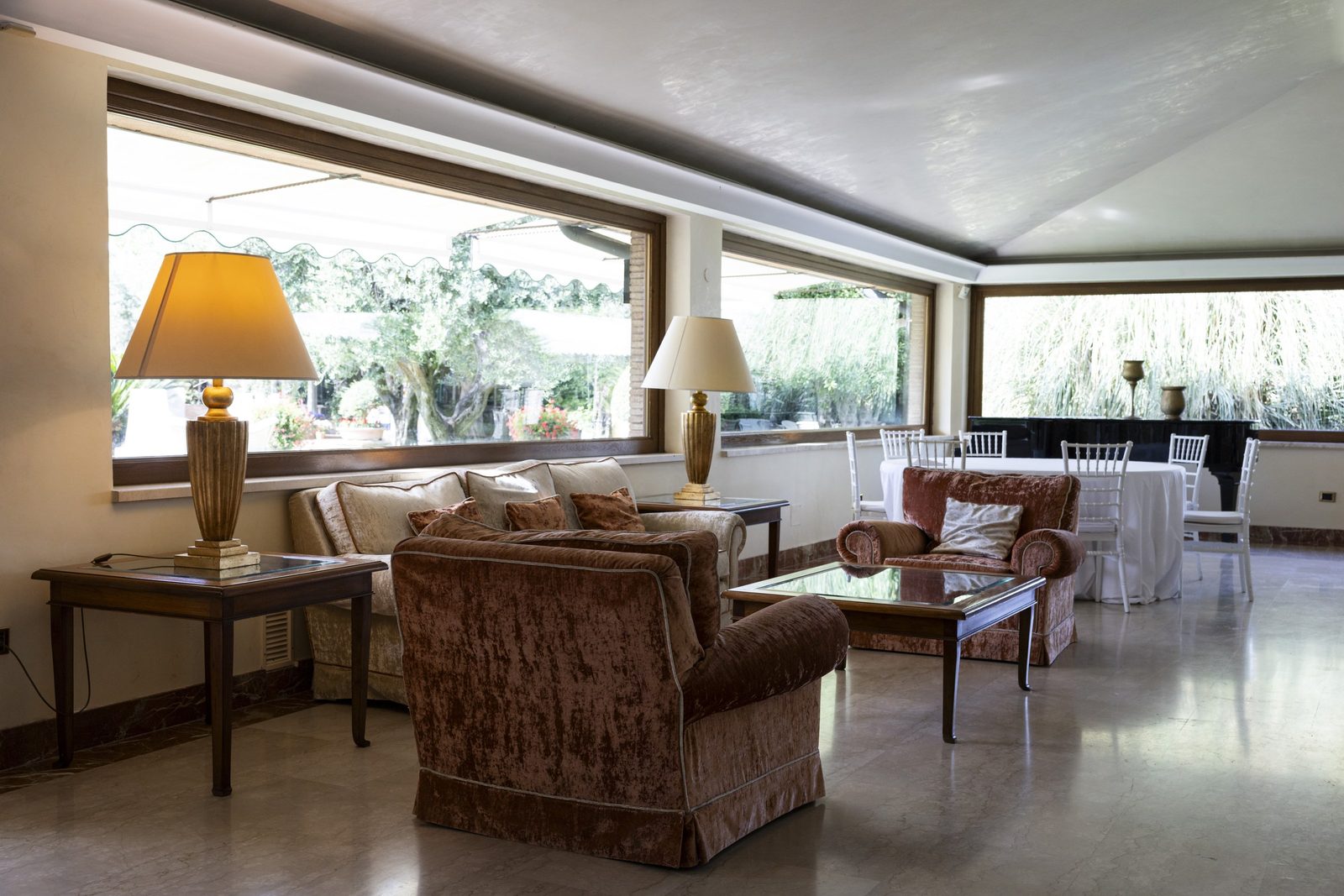
A banqueting service generally covers three areas. The first is the space: the rooms, the garden, the swimming pool and the car park. The second is table service: the menu, the drinks, the staff. The third is the setting: tables, flowers, lighting, and the details chosen with you.
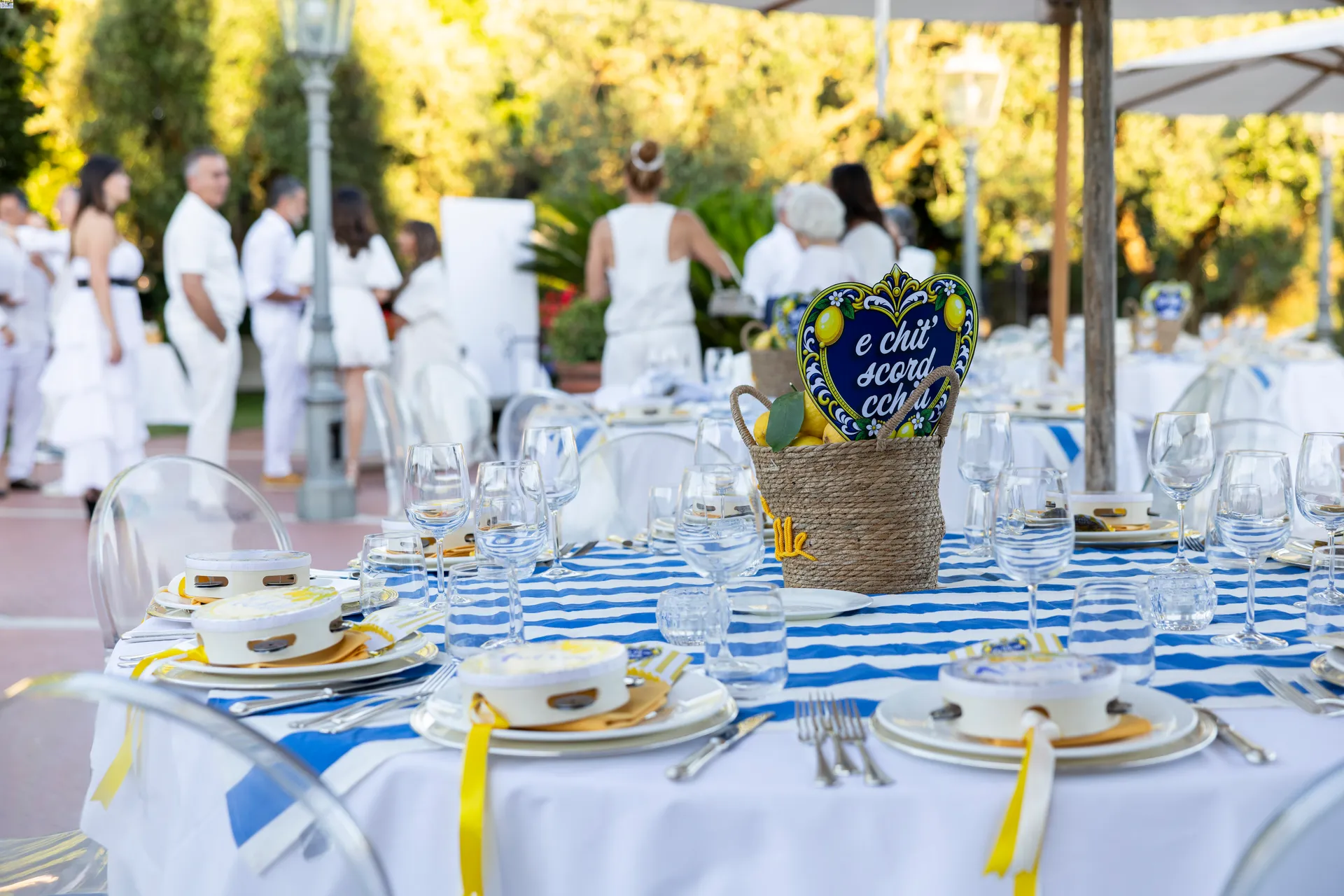
For weddings the Casale takes care of table settings, personalised menus, confettate (the table of sugared almonds, or confetti, that guests help themselves to), floral decorations, live music and DJ sets. For company events it offers drinks, coffee breaks, buffets, brunches, luncheons, and working lunches and dinners.
Why a single point of contact
With banqueting you have one person to deal with on the day, not four or five suppliers to coordinate. If the number of guests changes or the timing shifts, you tell one voice and the rest follows. The advantage shows most in the days before the event and in the busiest moments of the party.
As with any service, you need to know what you can bring in from outside: the cake, the music, the photographer. Ask before you sign, not on the day of the event.
Menus and formats: sit-down meal, buffet, open bar
The menu is the part guests remember most, and with banqueting you build it together with the kitchen. There are three main formats:
- a sit-down lunch or dinner, served course by course, which is more formal and slower;
- a buffet, which gets people moving and suits informal parties and company events; you will find the details in our article on the wedding buffet;
- an open bar, for the aperitivo and the party, with pros and cons set out in our piece on the wedding open bar.
You can also combine them: an aperitivo with a buffet, a seated dinner, a bar corner late in the evening. Tell the venue what kind of day you have in mind and ask for a tailored menu: at the Casale, menus are personalised for each event.
Allergies, intolerances and children
The menu has to work for all your guests. Collect allergies, intolerances and dietary choices (vegetarian, vegan, gluten-free) in advance, and give the venue the list with a few days to spare. If there are children, ask whether a simpler menu or smaller portions can be prepared. These are arrangements to make with the kitchen at the menu tasting or the site visit.
The role of the setting
The setting is the part of banqueting that people see: tables, flowers, candles, lights, place cards. At the Casale, settings are designed to measure, based on what the organiser asks for. Before you choose, look at the spaces and picture how they come together. For details such as the confettata (in Italian) the same applies: agree with the venue what is included.
Company events and banqueting
Banqueting also works for company events, with tighter schedules: a convention with coffee breaks and a working lunch, an end-of-year dinner, a presentation with an aperitivo. The page on corporate dinners (in Italian) describes how the Casale hosts them.
When to get in touch and what to bring to the first meeting
The first contact is to find out whether your date is free and whether the proposal suits you. Bring three pieces of information: the day, or two or three possible dates; the approximate number of guests; and the type of event, with an idea of the format (lunch or dinner, seated or buffet). With those, the venue can give you a precise answer.
Next comes the site visit, which lets you see the rooms and garden at the same time of day as your event, and the conversation about the menu. If the venue offers a menu tasting, ask when it takes place and who can attend. Bring your questions in writing: during a visit it is easy to forget some, and a list on your phone saves you a call afterwards.
What to ask the banqueting provider
- what the proposal includes: room, service, setting, drinks, music;
- which services you can bring in from outside and which you cannot;
- how the menu is built and whether a tasting is included;
- how many staff are planned for your number of guests;
- the deadline for confirming final numbers and how late changes are communicated;
- when you can enter to set up and when you have to leave the room.
The Consolini family has been organising receptions for two generations, as the story of the Casale explains. The ceremonies and events page lists the occasions it handles; the spaces and photos are on the page about the Casale’s rooms and garden and in the gallery.
How to ask for a proposal
To check availability for your date, fill in the questionnaire: it asks for the type of event, the number of guests, lunch or dinner, and the month. You can also write to info@casaleconsolini.it or call +39 06 722 0880; all the contact details are on the contacts page.